1766 · LONDON
A map cut into countries
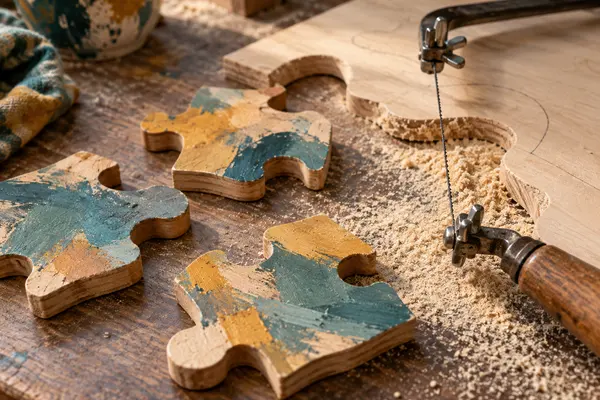
John Spilsbury mounted a map of Europe on wood and cut it along the borders, as a way to teach geography.
Where it beganTHE STORY AND THE SCIENCE
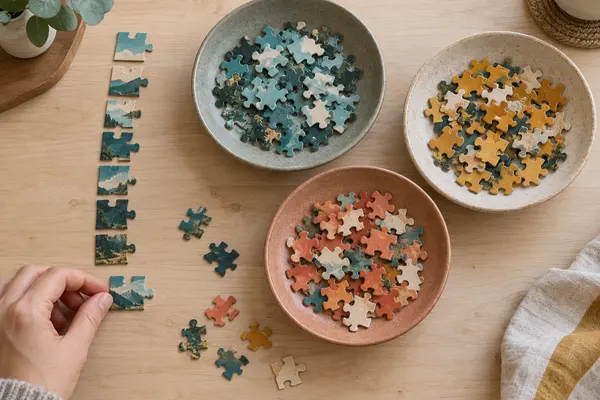
The jigsaw began as a geography lesson cut into pieces.
In 1766 a London map engraver glued a map of Europe to wood and cut it along the borders. Two and a half centuries later the puzzle has been a Depression-era craze, a factory product and the subject of a brain study. Here is the story, in plain English.
Plain English, with the sources linked.
SINCE 1766
THE SHORT STORY
Three moments explain
how the jigsaw reached your table.
1766 · LONDON
John Spilsbury mounted a map of Europe on wood and cut it along the borders, as a way to teach geography.
Where it began1876 · PHILADELPHIA
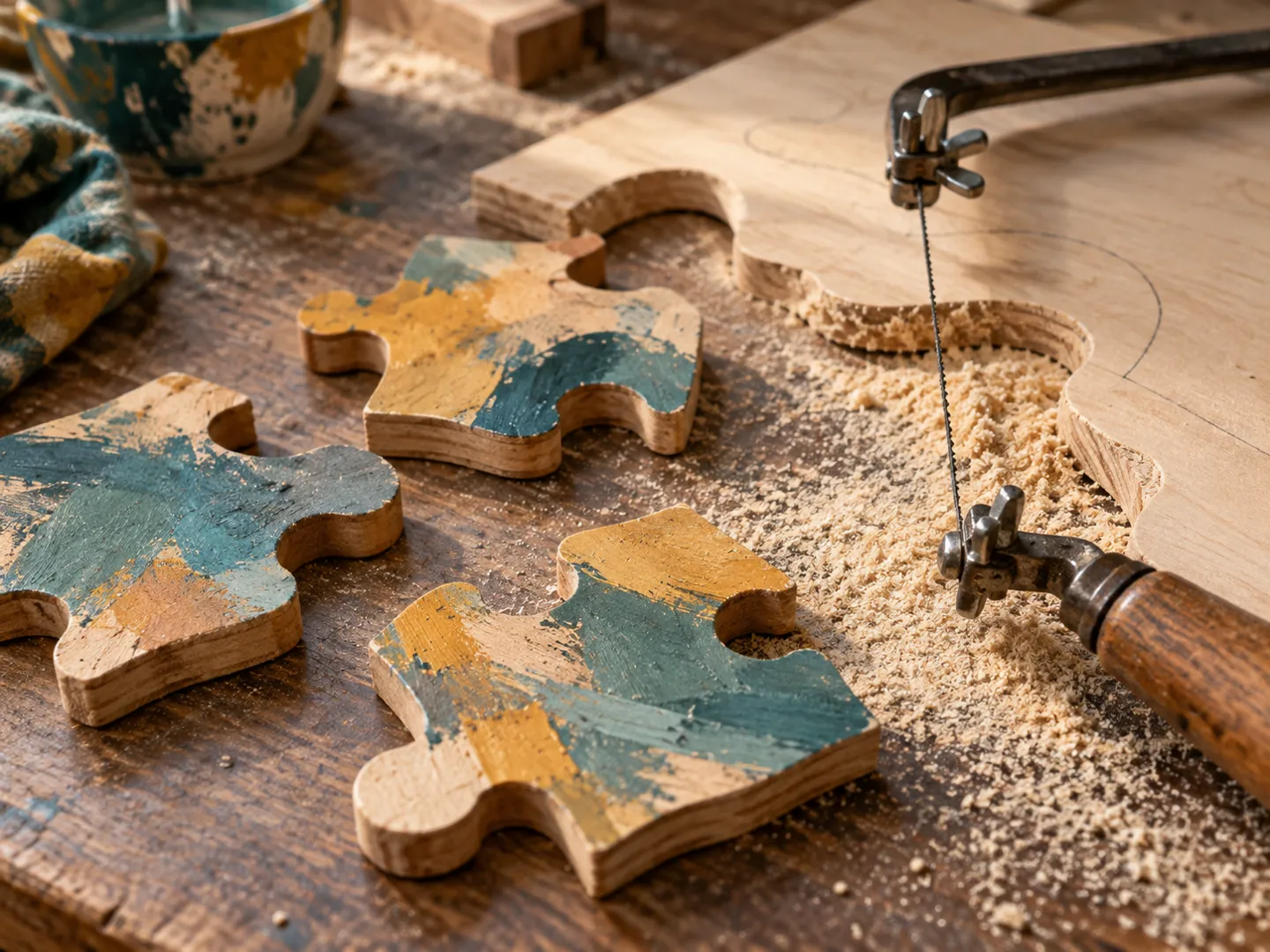
The power scroll saw shown at the Centennial Exhibition became known as the jigsaw, and home puzzle-cutting took off.
How it got its name2018 · ULM
Researchers found jigsaw skill tracks eight thinking abilities, but a month of puzzling did not boost them.
See the studyA QUICK EDGE COUNTER
Most puzzlers start with the frame. Pick a puzzle size to see how many pieces have a straight side, assuming a typical rectangular grid of rows and columns.
Makers use different grids, so your box may differ by a few pieces. The sum is simple: twice the columns plus twice the rows, minus the 4 corners counted twice.
WHAT ONE STUDY FOUND
A German team asked 100 adults over 50
to puzzle, and measured how they thought.
8 of 8
Abilities tied to jigsaw skill
Jigsaw skill was linked to all eight visuospatial abilities tested, from perception and mental rotation to working memory and reasoning. People with more lifetime puzzling tended to score better, even after other factors were accounted for.
THE LINK · 2018
3,589 in 49 h
Pieces joined, on average
The puzzle group got better at jigsaws, but their overall visuospatial thinking did not improve compared with a group that had counselling sessions only. The authors suggest long-term, not short-term, puzzling may help.
THE TRIAL · 30 DAYS
A link is not proof. People who think well may simply enjoy puzzles more. The study is a reason to enjoy jigsaws, not a treatment.
START A PUZZLE
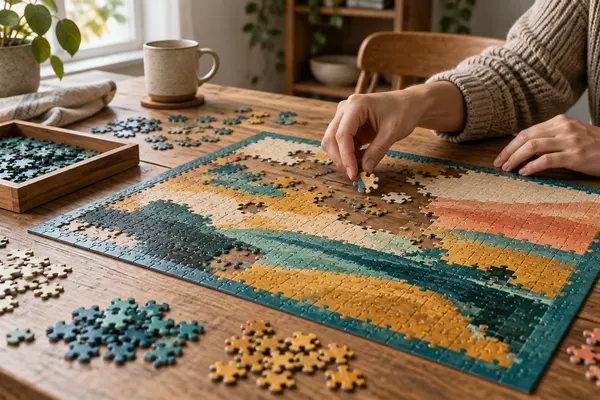
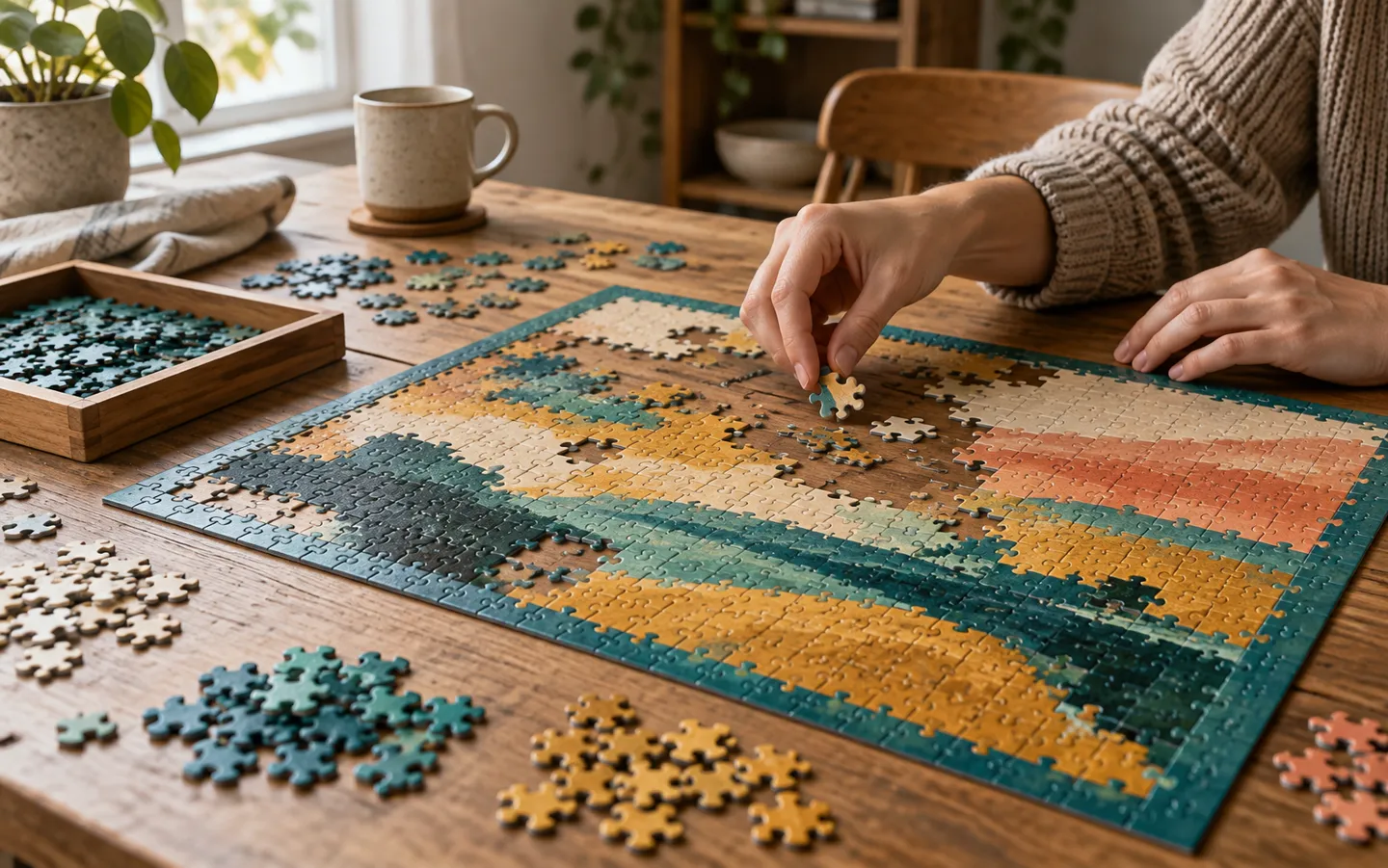
Before you join anything, flip all the pieces so the picture shows. It is slow at first and saves time later.
Set aside every piece with a straight side and build the frame. It fixes the size of the picture and gives you a place to start.
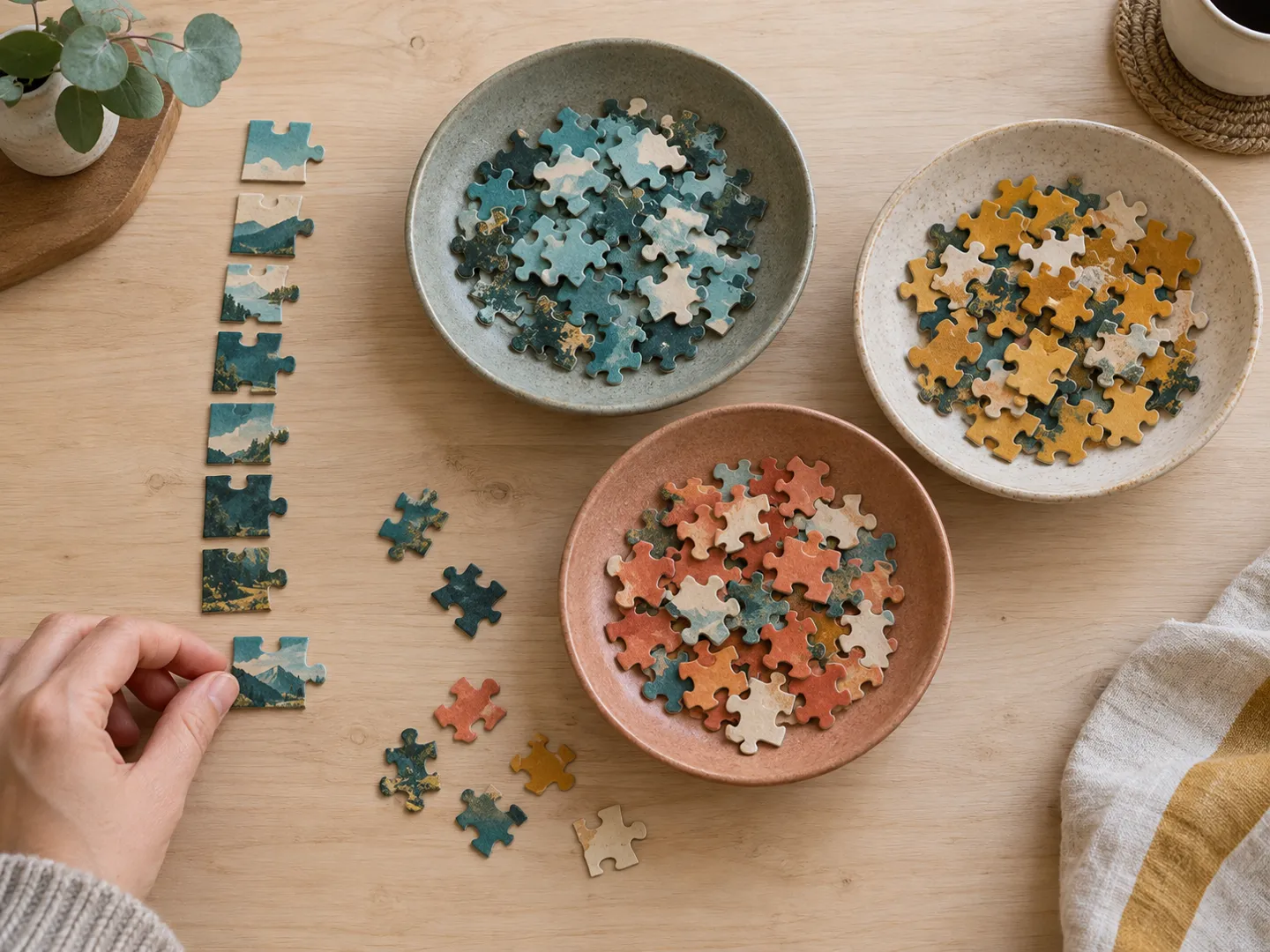
Group the rest into small dishes by colour, then work on the most distinctive area first, leaving plain sky or sea for last.
In plain areas, sort pieces by their knobs and holes instead. Good light and short breaks help you spot fits you missed.
JIGSAW FACTS
Guinness World Records credits John Spilsbury with the first jigsaw in 1766: a map of Europe on wood, cut along national borders. Such dissected maps were made to help teach geography.
The power scroll saw had its public debut at the 1876 Centennial Exhibition in Philadelphia and became known as the jigsaw. People then began cutting puzzles at home with it.
By 1910 Parker Brothers was the leading American puzzle maker, with about 200 women cutting puzzles by hand at its factory in Salem, Massachusetts.
At the height of the Great Depression craze, the jigsaw historian Anne Williams has said, about 30 million US households were absorbing 10 million puzzles every week.
In a 2018 Ulm University trial, adults over 50 who puzzled at least an hour a day on 30 days got better at jigsaws, but not at the wider visuospatial skills measured.
QUICK QUESTIONS
Short answers to the questions people ask most.
Guinness World Records credits John Spilsbury, a London map engraver, with the first jigsaw puzzle in 1766: a map of Europe mounted on wood and cut along national borders. These early "dissected maps" were sold as aids for teaching geography.
The name comes from the tool. The power scroll saw made its public debut at the 1876 Centennial Exhibition in Philadelphia and became known as the jigsaw; people then began cutting their own puzzles with it.
A 2018 study from Ulm University found that jigsaw skill was strongly linked to eight thinking abilities, and that lifelong puzzling went with better visuospatial thinking. It could not show that puzzling causes the benefit, and a 30-day trial found no short-term gain.
It depends on the grid the maker uses. Cut as 40 by 25, a 1,000-piece puzzle has 126 edge pieces, including 4 corners: about one piece in eight. The bigger the puzzle, the smaller the share of edge pieces.
Hugely. The jigsaw historian Anne Williams has said that at the peak, around 30 million US households were absorbing 10 million jigsaw puzzles every week. Cheap die-cut cardboard puzzles and home-made rental puzzles fed the craze.
Sources
A NAME THAT FITS
doodlejigsaw.com is part of the DoodleSale portfolio. Check the current listing and available purchase or lease options.